Naengjeyuk, Korean Chilled Pork: Front Leg or Rear Leg? The Cuts Compared, Plus a No-Fail Recipe
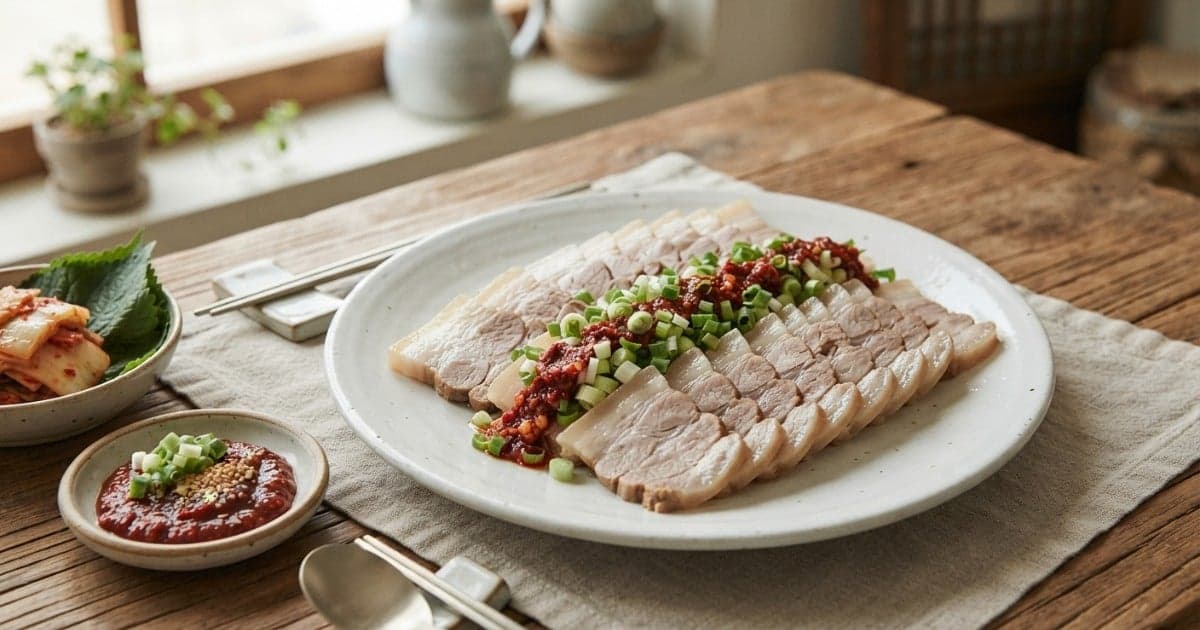
Warm boiled pork starts to feel heavy after a few bites. Chill that same pork and slice it thin, and your chopsticks somehow refuse to stop. That's naengjeyuk (냉제육), Korean chilled pork. You don't need a fancy cut for it. There's only one real question.
Jeonji or huji: which one should you buy?
The short answer, if you're in a hurry
- If you like it juicy and rich, go with jeonji
- If you want lean, clean, and cheap, go with huji
- If it's your first time, jeonji is harder to mess up
Jeonji and huji: where do they come from?
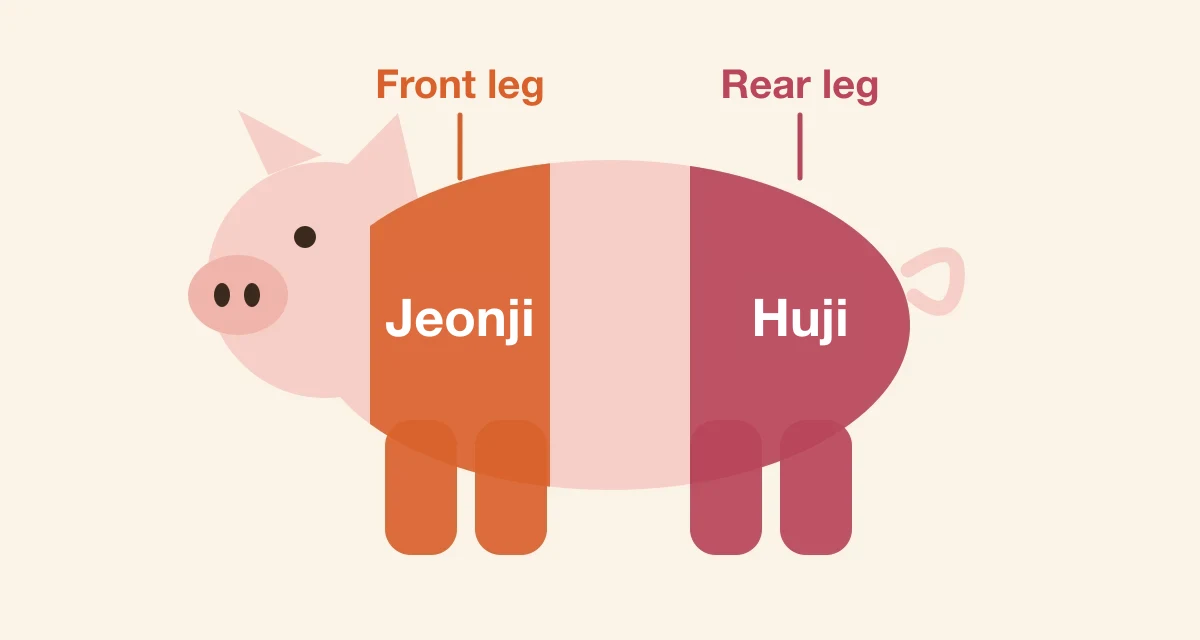
Nothing complicated here. Jeonji (전지) is the front leg and huji (후지) is the rear leg. Korean shops usually label them as apdari-sal (앞다리살) and dwitdari-sal (뒷다리살). Outside Korea, look for picnic shoulder for the front and fresh ham or pork leg for the rear. Both generally cost less than pork belly, so buying a whole chunk won't hurt.
Eating them cold makes the difference obvious
As pork cools, the fat firms up and you notice the texture of the lean meat more. So the two cuts show their personalities more clearly chilled than they do warm.
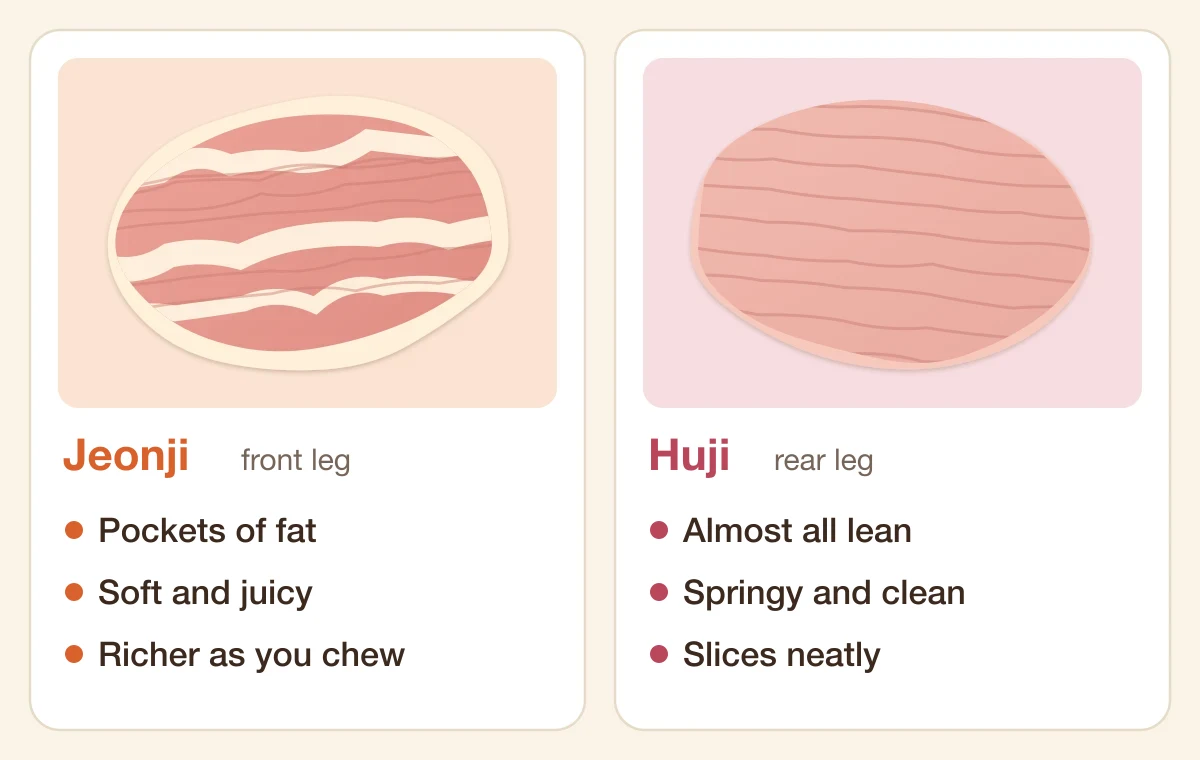
| Compare | Jeonji (front leg) | Huji (rear leg) |
|---|---|---|
| Flavor | Rich and deep | Lean and clean |
| Texture | Soft and juicy | Springy |
| Slicing | Mixed grain, a little tricky | Holds its shape, easy |
| Price | Usually a bit more than huji | Usually the cheaper one |
| Best for | Dinner guests, a plate with drinks | Salads, cold noodle topping, a light dinner |
Prices shift with the season and the shop, so feel free to grab whichever is cheaper and fresher that day. Huji turns dry if you simmer it too long, so just remember: simmer it a little less and slice it a little thinner.
Your shopping list
- 600–800 g (about 1.5 lb) of pork front leg or rear leg
- 1 Korean green onion (or 2–3 scallions), 5 cloves of garlic
- 1 tsp whole peppercorns, 1 tbsp doenjang (Korean soybean paste), 1 tsp salt
At the butcher, this is all you need to say:
"One whole piece for boiling, please, about 7–8 cm (3 in) thick."
An even thickness means even cooking. If you're buying jeonji, ask them to trim the thick fat a little. It eats much cleaner cold.
How to make it: 15 minutes of work, and the pot and fridge do the rest
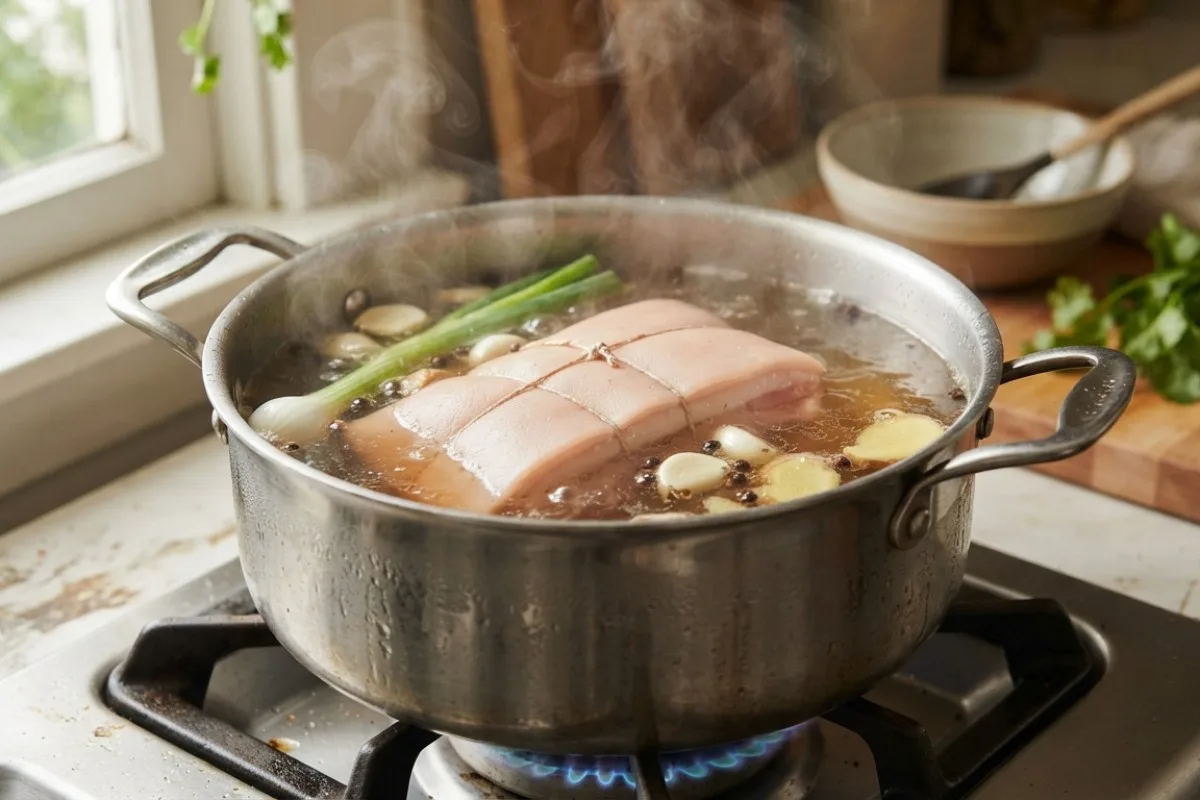
1. Simmer on low
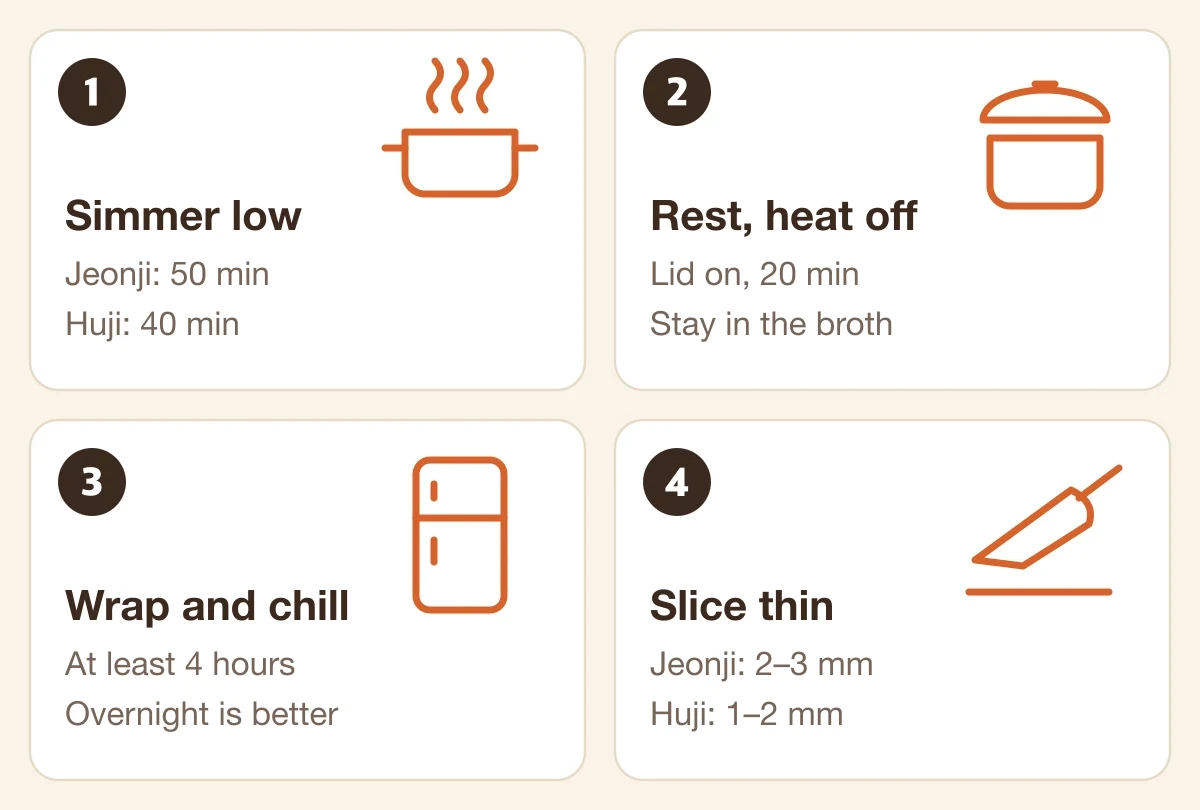
Boil enough water to cover the meat, add the green onion, garlic, peppercorns, doenjang, and salt, then add the pork. When it comes back to a boil, turn the heat down to a gentle simmer. Give jeonji 50 minutes and huji 40. If the piece is over 1 kg (2.2 lb), add 10 more minutes.
2. Rest with the heat off
Turn off the heat and leave it alone with the lid on for 20 minutes. This is what makes the meat so juicy, and it matters most for lean huji.
Poke the thickest part with a chopstick. If the juices run clear, it's done. If you see any pink, simmer it for 10 more minutes. A kitchen thermometer is the surest check: look for 75°C (167°F) or higher in the center. That's because the guideline from Korea's Ministry of Food and Drug Safety for cooking meat in bulk (article in Korean) is to heat the center to 75°C for at least one minute.
3. Wrap and chill
Lift out the pork, pat it dry, and wrap it tightly in plastic wrap. Let it cool for about 30 minutes, then chill it in the fridge for at least 4 hours. Overnight is even better. Rest a plate on top to press it gently, and it'll hold its shape and slice more easily.
4. Slice thin
Slice jeonji 2–3 mm thick and huji 1–2 mm. Lean huji gets more tender the thinner you go.
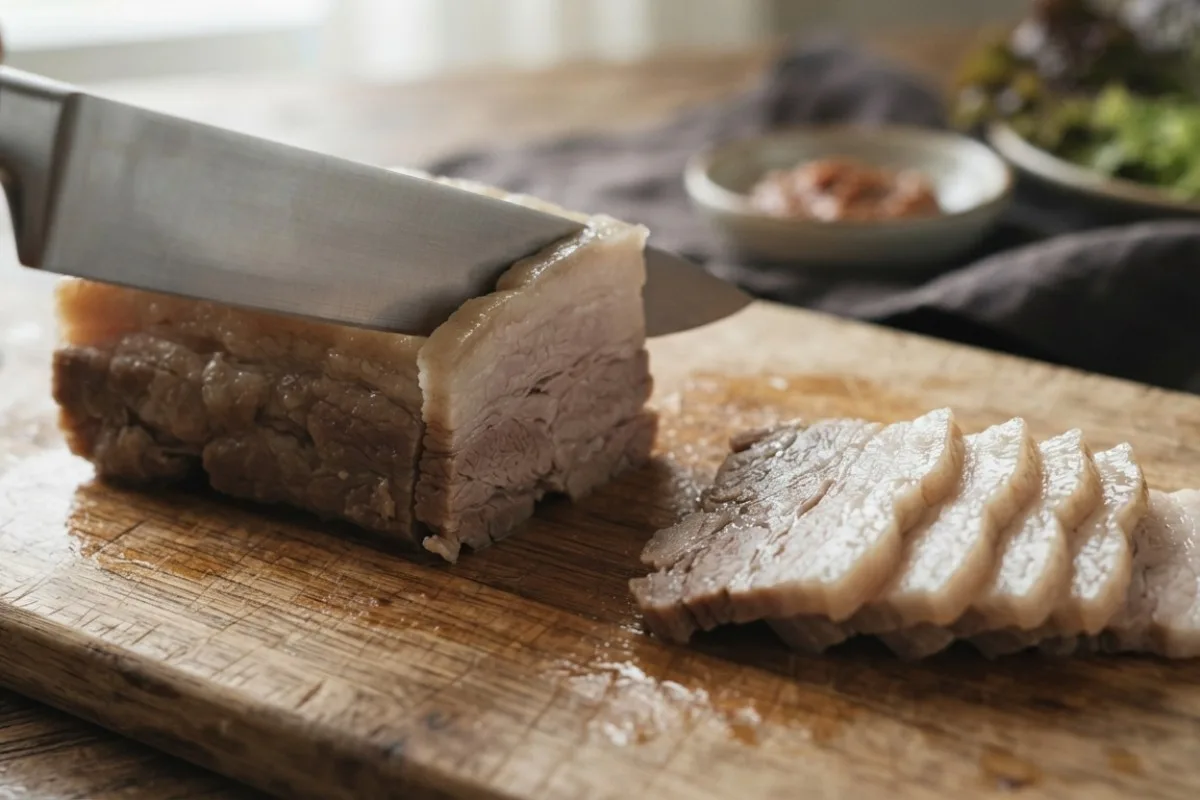
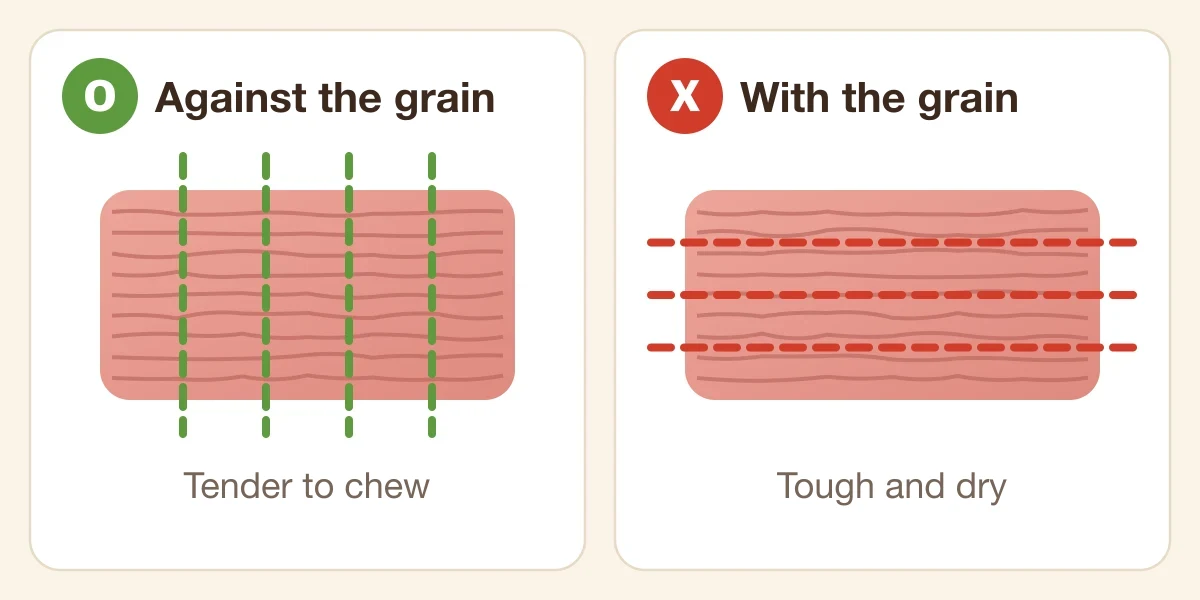
One rule changes the whole texture. Don't slice along the grain. Cut across it.
5 tips that make a real difference
- Freeze it for 20 minutes before slicing. The meat firms up and thin slices get much easier.
- Warm your knife in hot water. Wipe it dry first, and the fat won't cling to the blade as much.
- Take it out 10 minutes before eating. Too cold and you lose the richness, especially with jeonji.
- Slice only what you'll eat. Leftovers stay moister wrapped as a whole piece. Keep them in the fridge and finish them within 3 days.
- Don't throw out the broth. Cool it, skim off the hardened fat, and you've got great stock. Try it in kimchi stew or tteokguk (rice cake soup).
One bonus tip. If you can't choose, buy both. Put in the jeonji first and add the huji 10 minutes later, and it all finishes in one pot. Eat them side by side and you'll know your favorite right away.
These 3 sauces are all you need
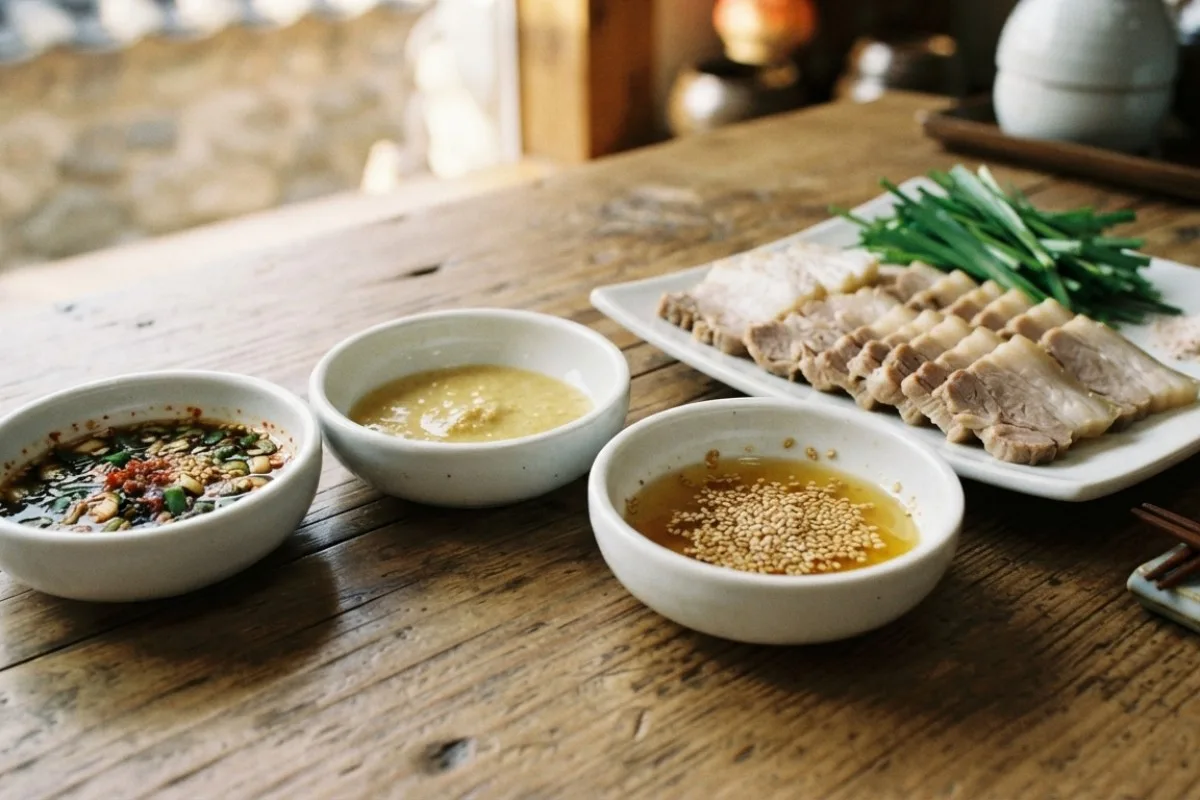
All amounts are in regular eating spoons, so a tablespoon works fine. Taste as you go and adjust.
- Green onion soy sauce (goes with either cut): 3 soy sauce, 1 vinegar, 1 sugar, 1 gochugaru (Korean chili flakes), 3 minced green onion, 1/2 minced garlic, 1 sesame oil, a pinch of sesame seeds
- Mustard soy sauce (best with jeonji): 2 soy sauce, 2 vinegar, 1 sugar, 1/3 Korean mustard paste. The sharp kick cuts through the richness.
- Perilla oil and salt (best with huji): 2 perilla oil, a pinch of salt, a pinch of sesame seeds. It adds the nuttiness that lean meat lacks.
Add some garlic chives or perilla leaves and well-fermented kimchi, and dinner is on the table.
Frequently asked questions
Can I use frozen pork?
Yes. Thaw it completely in the fridge before simmering. If the center is still frozen, the outside tends to cook while the inside doesn't.
Do I have to soak out the blood?
No. Patting the outside with a paper towel is enough. The green onion, peppercorns, and doenjang take care of any porky smell.
When should I make it for guests?
Simmer it the evening before. On the day, all you do is slice and plate. Few main dishes leave you this relaxed.
Maybe swing by the meat counter on your way home?
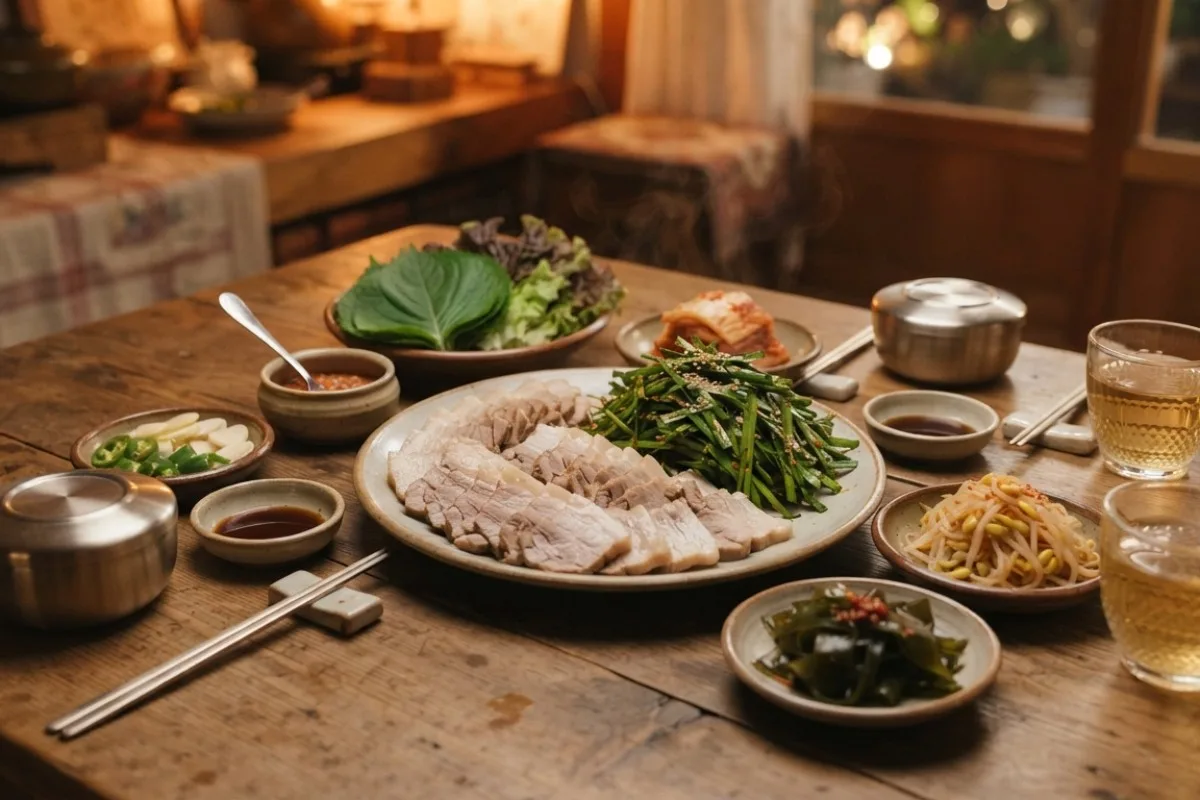
One chunk of pork gets you tomorrow's dinner, a topping for the next day's cold noodles at lunch, and stock for stew. All you have to do is say "one whole piece for boiling, please" and drop it in a pot.
Simmer it tonight and put it in the fridge, and tomorrow all that's left is slicing.
The food photos in this post are AI-generated, and the diagrams are illustrations made to help explain things. This post was originally written in Korean and translated into English.